


⭐⭐⭐
Developer (Platform): Bethesda Game Studios (Xbox Series X)
Publisher (Release): Bethesda Softworks (2023)
Length: 20-40 hours (Main Story); 100s of hours (Side Content/Completion)
Genres: Adult; Sci-Fi; RPG; Open-World; Action-Adventure
❗️Disclaimers❗️:
strong violence and some gore
flashing lights and uncomfortable visual bugs
this review contains low-level spoilers
recommendation: vibe check before playing and buy on sale
👍 Pros 👍
Rich world-building through exceptional side quests
Varied player-chosen stories that allow for a highly customisable experience
Punchy gameplay and building mechanics
👎 Cons 👎
Often repetitive and bland
Soulless main quest
Plagued with performance issues and mechanics that counter the aim of the game
👀 Synopsis & Trailer 👀
From humble miner to space-hopping adventurer, join Constellation, a mysterious group of eclectic explorers, to uncover the mystery of ancient, perhaps alien, artifacts.
🛎️ Introduction 🛎️
Starfield…the marmite of this year’s gaming landscape. Love it, hate it, there seems to be no middle ground, and, for better or worse, that’s exactly where it falls. Full of Bethesda’s familiar heart and soul, it can’t seem to escape the lessons the developer never seems to learn from. It’s a frustratingly fascinating adventure through a sci-fi future full of mystery, intrigue, and bland open spaces. Every step forward is mirrored with a step back and every offering of immersion is broken by a game fighting against the player’s enjoyment. It’s such a hard game to pin down and analyse, but let’s give it a shot.
🧩 Plots 🧩
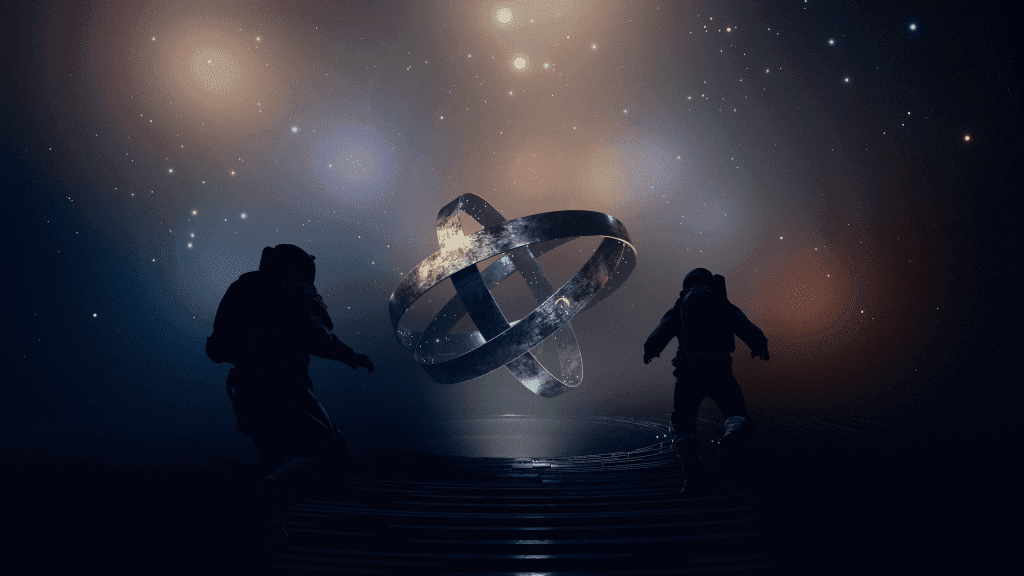
Starfield heavily relies on mystery and exploration as its core themes, but, before we get to them, I want to start on a positive note. As an epic RPG, Starfield focuses on three types of story content: the main quest, side quests (chains of individual missions leading to a conclusion outside of the core plot), and side missions (your standard go here, go there subplots many consider padding). Want to experience the real glory of the game? What exactly it has to offer in a balanced and thrilling tale? Sadly, it’s not the main quest that’ll provide that, but the Crimson Fleet side quest. In my opinion, it is the strongest, most engaging aspect of the game, expertly balancing straight-up action, espionage and deceit, and electric space battles. It showcases the game’s potent but unrealised potential in its purest form, and, sadly, casts the rest of the game in a starker light.
Ooooo, shiny
Which brings me to the main quest…
Initial mystery gives way to the most horrendously repetitive gameplay loop I’ve experienced. Most games are repetitive by nature, which can’t be denied, but Starfield’s main story doesn’t even try to hide its boredom. Go here and grab that artifact, go there and grab that one, rinse, repeat, rinse, repeat. It’s beyond frustrating. If you only play the core of the game, it’s a terrible representation of it. Bethesda is known for its underdeveloped primary plots, with more focus on the side quests that allow for their excellent world-building, but Starfield is a particularly egregious example of a lack of planning or care.
Its final twist in regards to the New Game+ I’m sure everyone at this point has heard of is nifty and mechanically interesting, but it lacks the support it needs to truly impact the player. Should you rush to it as I’ve seen a few on social media say? No, absolutely don’t, its benefits mean nothing if you haven’t experienced the wider array of stories Starfield has to offer.
Ooooo, not so shiny
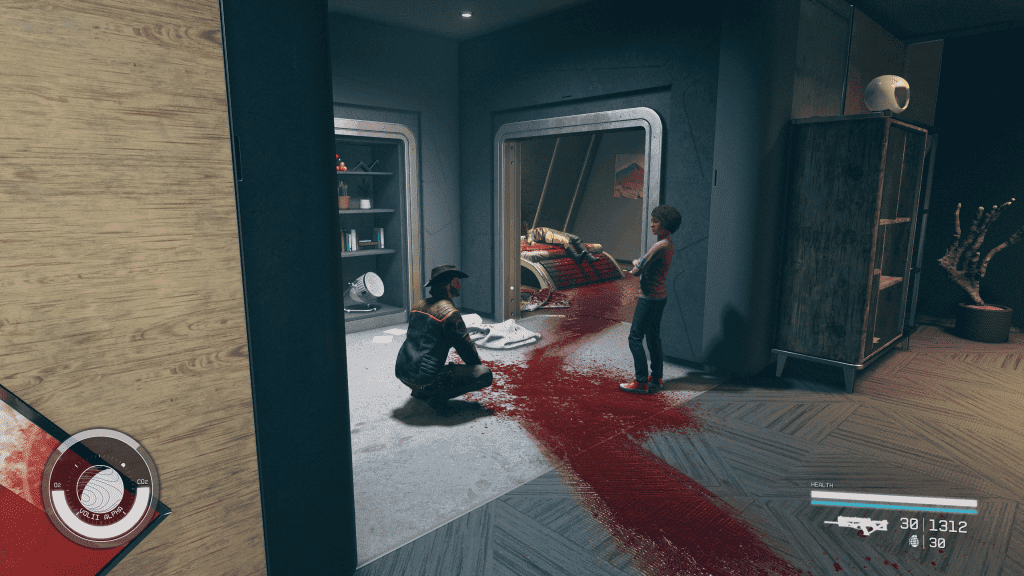
Side quests, as per usual and like I said about the Crimson Fleet storyline, are where the real meat of Starfield’s narrative lies. They explore Bethesda’s wickedly fascinating future landscape that showcases how talented they are at building diverse worlds that are juicy and rich. Little moments of random encounters like meeting the space-faring Grandma or a shanty-singing Scotsman add real life to the limited exploration. Frustrating is a word I’m going to use a lot because the rotted core story foundations fail the delight Bethesda has built on top of it.
Initial mystery gives way to the most horrendously repetitive gameplay loop…
🎭 Characters 🎭
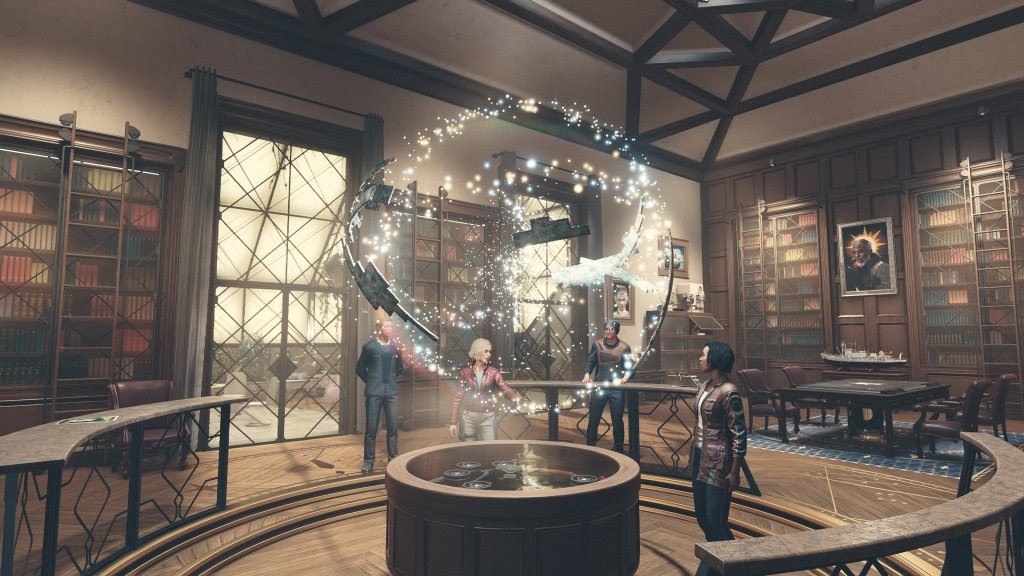
Silent, player-created character in tow, Starfield is full of interesting and diverse cast members to meet and get to know. Joined by the members of Constellation, I initially loved every second of getting to know my comrades and seeing how they reacted to my actions as I paved my own way…until I realised that the game’s repetition also infects its companions. Their reactions are, sadly, all the same, leaving their diverse backgrounds to crumble as the player realises they’re all just reskinned versions of the same sickly moral good guy. They’re even equipped with their own ‘loyalty missions’ (Mass Effect 2, anyone) that allow the player to dive deeper into what drives them and what they bring to the table. The plots aren’t quite on par with the side quests, and leave the player thinking of Mass Effect 2, but they blow the main story out of the water and take a fraction of the time to complete.
Characters are shallow
Outside of the companions, and given some leeway for just how expansive Starfield is, supporting characters are a mixed bag. For every engaging individual with a rich backstory, five cookie-cutter cutouts join them. That’s not to mention the gameplay issues that plague interactions, from companions being miles away from NPC conversations but still taking part (leading to some jarring jump cuts) to characters just straight up disappearing. For example, despite being assigned to my ship, I found Barrett out in Jemison’s wilderness swimming. Why? Who the hell knows (maybe he’s just quirky like that)? Or the time Sam, my actual companion, sank through the ship, becoming unreachable. I could go on and on, but gameplay issues are coming up.
Attention!

Performance-wise, everyone does a decent job. Sure, not every conversation lands with the right emotion, but given the breadth of stories the actors had to read, it hits an okay middle ground that never feels amateurish but never really feels like their characters are experiencing what’s actually happening around them. It doesn’t help that the writing feels oddly disjointed and, given the surprisingly limited outcomes for your actions, most dialogue options end the same way regardless.
…they’re all just reskinned versions of the same sickly moral good guy.
👾 Gameplay and Graphics 👾
Here. We. Go.
The real meat and potatoes of Starfield. The inner workings, the mechanics holding everything up. Bethesda, in some more critical circles sadly known as Bugthesda, did an okay job this time around. Being the huge first-person RPG (with third-person viewpoints for players that prefer that style but are ones I don’t recommend) it is, it could’ve been worse. That, however, is not forgiveness. Starfield is littered with the bugs, glitches, stuttering, and all other manners of chaos that have been plaguing Bethesda games for over a decade. It’s another frustrating area that does not seem to be getting better. The issues are well documented so I’ll try not to harp on too much, but my disappointment in seeing how praised the game was for its polish only for said polish to be minimal at best cannot be understated.
So what about core gameplay mechanics? As a first-person shooter, Starfield is fine. Weapons are somewhat varied, unique, and feel and sound fantastic. It’s crisp and punchy with a wealth of character builds to suit your gameplay. The game is fun, without a doubt, and despite awful inventory screens, it doesn’t skimp on the enjoyment of building your character. This leads me to skills, the upgradable abilities Starfield offers players to design their own playstyle. These trees are seriously awful. The number of times I saw such a basic ability teased to me by the loading screens only to find it hidden behind a skill point genuinely hurt my soul. Not to mention how, initially, the game practically forces you down a certain skill path with ridiculously low encumberment levels (seriously, get rid of encumberment, the transparent padding is anger-inducingly transparent). From simple stealth mechanics or much-touted ship gameplay, you’re likely to find what you need to progress hidden behind a skill point. Need a skill point? Probably do some more side missions, right?
Exploration is, well, something?

Wrong. Starfield, in a weirdly positive way to begin with, offers the most experience for simple exploration. At first, I thought, fantastic, this is the perfect way to highlight the game’s core selling point: exploring the vast mysteries of space. Then. You. Hit. The. Loading. Screens. Loading screens aren’t really an issue for me most of the time. I don’t need seamless, just smooth enough, but Starfield destroys its own aspirations with just how jarring and counterintuitive its biggest marketing push described. Players will be greeted with a loading screen to enter an area, a loading screen to enter their ship, a loading screen for that ship to take off, a loading screen for that ship to travel to another destination, a loading screen to land, a loading screen to exit the ship, and a repeat of all of the above to progress in any way shape or form. It narrows and completely shrinks Bethesda’s goal of space. Boring, procedurally generated planets are painfully bland, and the dense cities which are so impeccably built face the most frustrating performance issues that it almost becomes unbearable.
I, of course, can’t speak for everyone, but my experience with performance issues only got worse the longer I played. Specifically, stuttering, freezing, and crashes plagued my playthrough every few hours, and, yes, I tried to troubleshoot the issues, from messing with my saves, uninstalling for a fresh install, turning off quick resume, changing the save frequency in settings, to even testing other games to see if the issues were being exacerbated by my console. Nope, Starfield just performs poorly. It’s overdeveloped, with features that arguably don’t need to be there and are only there for the bragging rights rather than the player’s experience.
There is some magic

More positivity, Matthew, more positivity. Okay, so, shipbuilding and outposts. Putting all its issues to the side, Starfield wants you to live in its world and you do want to live there. The ability to customise your ship in an exciting array of builds, buy your own property to decorate, and build outposts on distant planets to boost resources are all impeccable additions to the game. The player will get lost for hours of pure giddy enjoyment building and designing their own stamps for their journey.
…my disappointment in seeing how praised the game was for its polish only for said polish to be minimal at best cannot be understated.
🧠 Final Thoughts 🧠
Starfield is a jack-of-all-trades and a master of none. It desperately needs an editor to cut through all the idealistic but useless features to remind the developers that quality always trumps quantity. A rich world and fantastic side quests clash with an uninspired main quest and a plethora of performance issues that render the game’s push for exploration anything but. It’s a mix of the studio’s Skyrim with the genre-defining Mass Effect series, but never quite satisfies those itches and leaves the player thinking of stronger experiences. I ran into a plethora of issues from glitches to outright crashes, spent an inordinate amount of time troubleshooting issues I shouldn’t be worried about on console, and doing my best to accept that Bethesda doesn’t seem to care to learn from lessons that have hurt them for decades.
While Starfield seems stuck between generations and intentions, it’s still fun (frustrating fun, sure, but fun nonetheless). Its side quests shine and its crisp combat only gets better the more skills you unlock. Character creation and crafting your journey are both solid in design and execution, and the game does reward your investment. With all my criticism, I am excited for the universe’s future and the undoubted refinements to come, but the developer’s ego needs some serious attention, and quality control needs a firmer, more moderate hand.

 The Phoenix Project